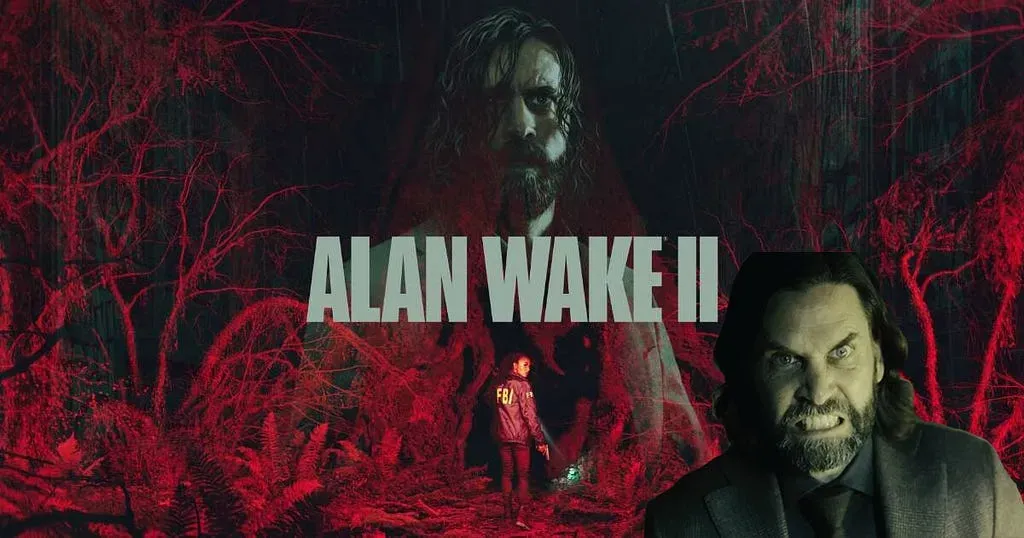
Disappointing. Boring. A walking simulator—This is how underwhelming some reviewers find Alan Wake 2 to be. Although this game might be an acquired taste, what would a fan of Alan Wake 1 who was also deeply invested in its narrative say?
Story
Alan Wake 1 set the bar quite high with its gripping yet conceivable story that offered a smooth resolution and satisfaction at the end. The story in the second game follows the return of Alan Wake, who was previously drowned in Cauldron Lake, and how they, Alex Casey, and a brand-new protagonist, Saga Anderson, attempt to put a stop to the “Dark Presence” that got out with Wake.
The first installment was all about Alan Wake, the magical phenomena around Bright Falls and Cauldron Lake, and his survival as a writer who resorts to a flashlight, a gun, and his writing. This storyline felt more personal and relatable, and Alan Wake was more than likable, unlike how he is portrayed in the new story.
The second game, on the other hand, pushes Alex Casey’s narrative a bit too much to the point that I just wanted to get it over with. Sometimes I couldn’t help but feel as if it was a way to forcibly include Sam Lake (Remedy's creative director and the face model for Alex Casey) in the game’s narrative. The cult, the cult leaders, and their motives for rituals and whatnot are somewhat interesting and don’t take our attention away from the protagonist’s plight. Plus, Alan Wake 2 provides answers to most of the things that happened in 2010.
However, Saga’s involvement in the story and making her the visible protagonist turns Alan Wake into a rather feeble character, sidelining him in his own story. What’s worse, Saga addresses Alan Wake as “a white A**hole” near the end of the game, which made me slightly nauseated. Even if this was the writers’ grand way of implying that it’s never good to be racist, it adds nothing to the narrative and is unnecessary, especially for a video game of this scale.
Not to mention, the new narrative seems even more complex than it’s supposed to be, as if they desperately tried to make an intricate story just for the sake of it. The ending, however, lacks resolution and is anxiety-inducing. Some might argue about the unsolved ending of Alan Wake. Comparatively, even though the first game didn’t give us all the answers, it still felt pretty good at the end and made me crave a sequel for many years.
Gameplay
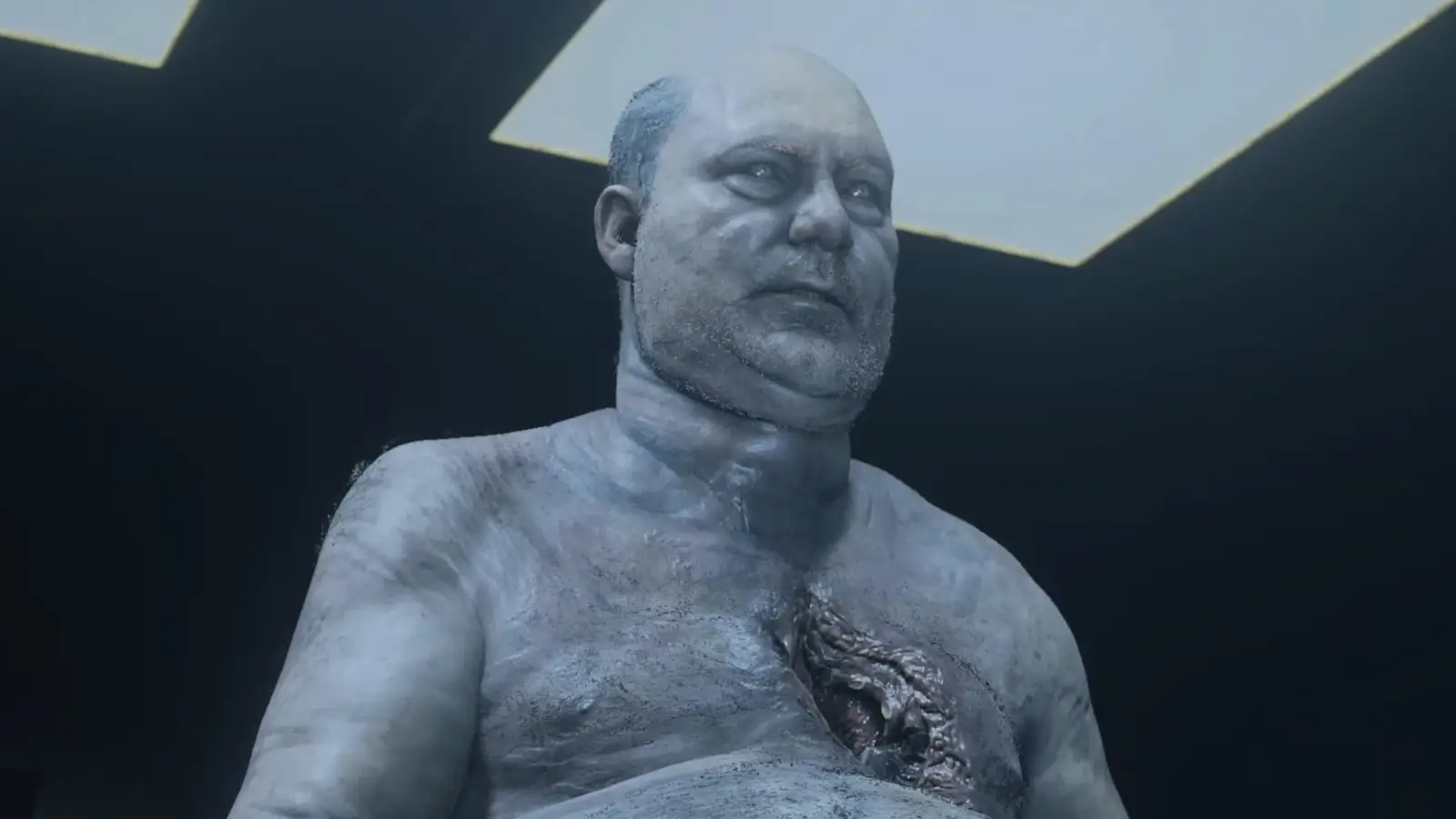
Alan Wake 2 gameplay starts on a high note, not to mention one of the most impressive openings I’ve seen in years. The graphics are impeccable, and the gloomy atmosphere around the lake and the forest complements the story and beautifully captures the vibe of the previous game, which is an ode to Alan Wake. The character designs are also a pro.
But, the gamers, including myself, who anticipated going in with guns blazing like before, were taken aback by the snail’s pace gameplay and tedious case-solving inside Saga’s head, A.K.A. the mind place. Put simply, I didn’t expect to dive into a case board at the very beginning of the game. Despite this, when I encountered the first boss, it was exhilarating, difficult even in the easy mode, and foreshadowed a challenging gameplay for the rest of the game. Boy, was I wrong!
The above-mentioned gameplay element of case-solving becomes incredibly monotonous since it’s a reiteration of what exactly happened a few minutes ago. All you need to do is put some pictures in order and link the cases to come to a verdict that you’ve already come to. Saga’s profiling is accompanied by repeated animations and, quite frankly, even more unenthusiastic live-action cut-scenes playing in the background.
In terms of the playable characters, their sluggish movements discouraged me from covering more ground. Evidently, the spacious world needs to be explored, but when the characters run and dodge at a glacial pace, the fun of exploring is dissipated. Even sorting items and moving them around feels cumbersome. Although it’s unfair to compare it with Resident Evil, even the older games like Resident Evil 4 excelled at inventory management.
Cult boxes scattered around the world are another delight. If you aren’t math-savvy, like me, get ready to Google the answers to the math problems that need to be solved in order to collect the loot inside. In my case, my husband solved the problems on my behalf. But, as a gamer, I would like to do them all by myself, and as a result, I was completely irritated because the game wasn’t meant for goons like me. Even if you get a kick out of solving math problems and opening boxes one after the other, the rewards aren’t good enough. Besides the occasional new weapon that you’ll find, the effort just isn’t worth it. Most of the time, it’s either some health kits, ammo, or flares.
The issue is that even if you disregard the lack of satisfaction, you won’t need an abundance of ammo or health kits just to pass by two or three enemies. The enemies aren’t that impressive either, and there isn’t enough variety as well. Boss battles are just mediocre, and nothing groundbreaking was done to elevate them above average.
Even the charms you receive by solving the nursery rhymes aren’t that useful; most of mine were leisurely put away in the shoebox (storage), except for some, for example, the one that increased the charge of the flashlight.
The weapon upgrade system is another bust. The system itself isn’t half bad, but again, the question is—why? When there aren’t enough enemies populated around the world, or difficult ones for that matter, your weapon upgrades or supplies don’t matter. Why would anyone bother upgrading them if there is no significant use for them?

Nevertheless, having the option to change reality halfway through to switch between Saga and Alan’s story is clever. Likewise, how Alan can change scenes and alter his environment by typing on his typewriter is another brilliant addition.
Although the settings are exceptional and they are the epitome of horror, and the music makes your heart beat faster, when you anticipate something to come right at you, nothing comes at all. Sometimes, you won’t even have to discharge a single bullet or arrow.
I am more than willing to forgive the occasional T-posing (The neutral resting position for 3D models when they stand straight, creating a T shape with arms extended to the sides) and suddenly falling through the floor bits in Alan Wake 2. But, sometimes you’ll spend a LOT of time wondering what to do, even if you have the answer in your hands, say a fuse for instance, just because the game unnecessarily holds you until you progress to some parts. Things like these make the game feel broken.
I mostly enjoyed where I could play as Saga, primarily because I liked the Coffee World level, and most of her sections were in the forest. As for Alan, I was yawning during the subway section, and all I wanted was to get out of there and resume playing as Saga, which I did. There wasn’t anything exciting in Alan’s walkthrough, except for the latter part when Alan enters the forest for just 1 or 2 minutes. Letting us play as Alan in the forest with his flashlight and gun, followed by the classic Alan Wake music, was enough to induce nostalgia and put a smile on my face. This underscores the small changes that could’ve been made to create another video game that is worth mentioning decades later, just like the first one.
Visuals
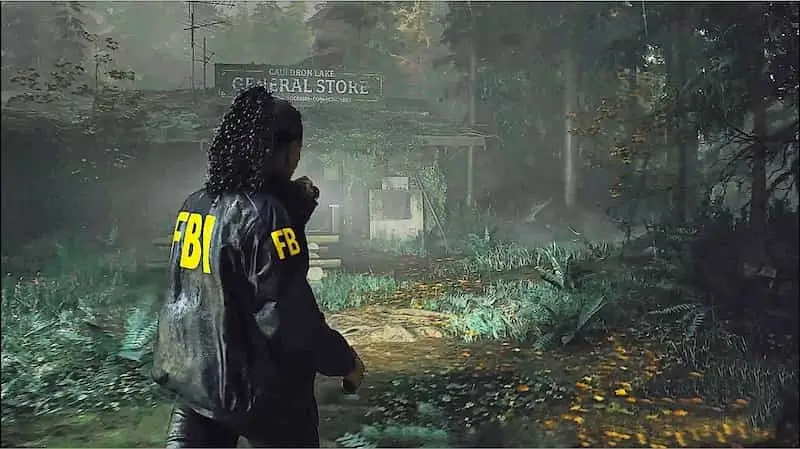
The visuals are stunning. Alan Wake 2 could essentially be the cornerstone for the aesthetics of future horror games. However, I have noticed some issues with its lighting. For instance, when you go inside a house, the outside appears to be very bright, and once you step outside, it becomes significantly darker. The other inconsistency with lighting is that, when you clearly see the sun and sun rays around you, it feels like broad daylight, but in some areas, Taken (The shadowy enemies) come and attack you even though it’s not nighttime.
Superimposing two visuals together to indicate that you’re in another reality is wise, too.
Speaking of showing things, Alan Wake 2 is packed with cheap jump scares. They do not do anything but make you furious. The first game also had its fair share of jump scares, but they had a purpose, and you actually could do something. For instance, a Taken would come out of nowhere, and you have to shoot it before it kills you, which is fun and rewarding.
Music
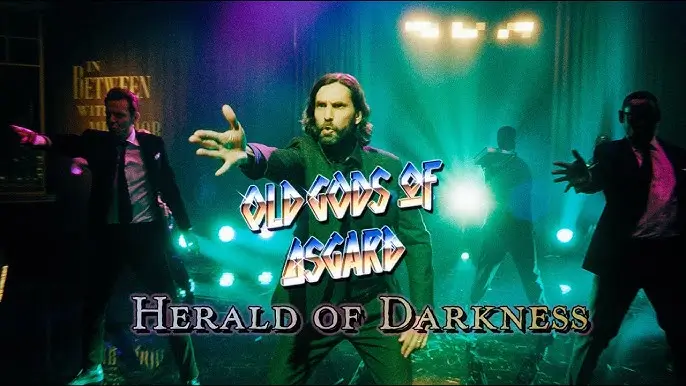
The eerie surroundings are supplemented with creepy music, and the Old Gods of Asgard didn’t disappoint this time around as well. Alan Wake’s musical with Herald of Darkness playing in the background was one of my favorite sequences of the game. Some of the other tracks featured in the game from various artists were also entertaining.
Verdict - Is it a bad game?
Is it a bad narrative? No. Is it a detective game? No. Unless you think sorting some pictures on a board is. Is it a survival horror game? It screams interactive drama horror rather than a survival horror. The bottom line is that the balance between scarcity of supplies and having more formidable enemies is lost. I love a good interactive drama horror video game, if it were marketed as such. Then again, the gameplay and drama, so to speak, need to be balanced.
So, is it a bad game? No, but unfortunately, it’s not good.
In all honesty, playing Alan Wake 2 felt exhausting, so much so that I couldn’t play it for several days after getting started. I only continued because, of course, we paid for the game and I had to finish it to see the ending, and even that didn’t go as planned.
When it comes to the fresh face of Saga, she’s an exceptional character, and her gameplay was generally a fun experience. Hadn’t her character been written to undermine the hero, the game could have had the potential to be a tad more likable.
As a gamer who thoroughly enjoyed the first game more than a decade earlier, I had high hopes for Alan Wake 2. Be that as it may, its unparalleled visuals, some game mechanics, some bosses, the mighty musical, and music aside, Alan Wake is truly a beautiful disappointment.